How Your Credit Score Affects Your AZ Mortgage Rate in 2026
Published on May 10, 2026
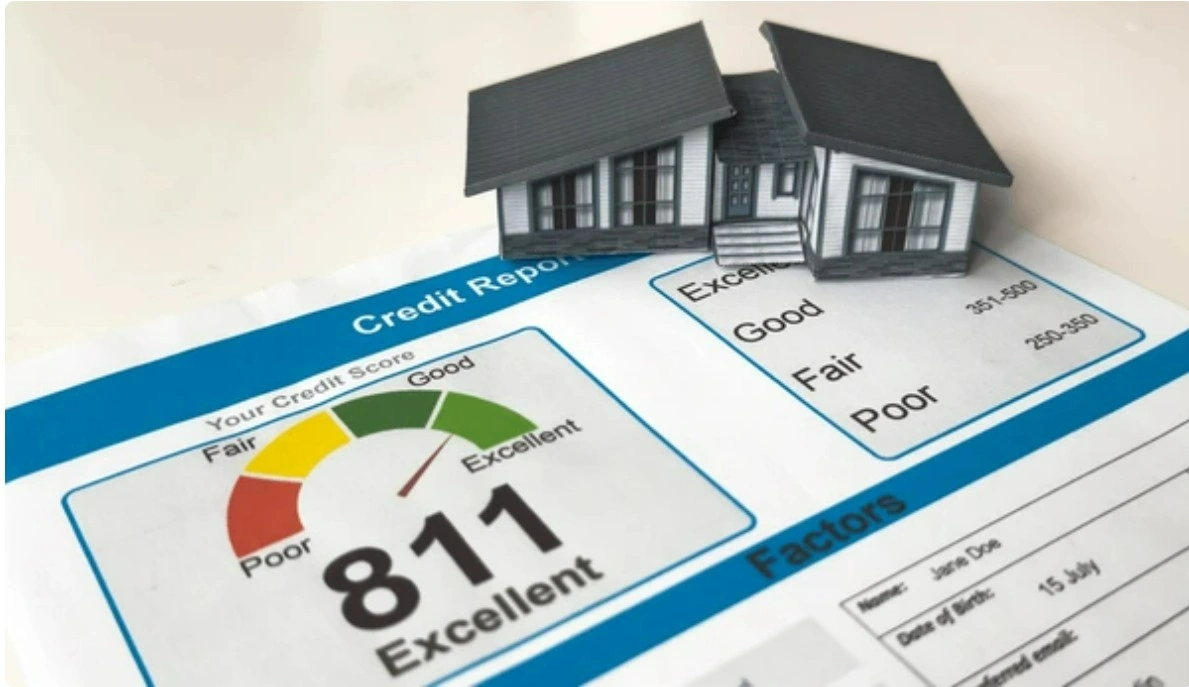
In the high-stakes world of Arizona real estate, your credit score is more than just a number—it is the gatekeeper to your financial future. As we navigate the housing market of 2026, lenders have tightened their belts, and the difference between a "Good" score and an "Excellent" score can translate to hundreds of dollars in your monthly payment.
Whether you are looking to buy your first home in Gilbert, upgrade to a luxury estate in Scottsdale, or refinance your condo in Tucson, understanding the 2026 credit landscape is non-negotiable. This guide will peel back the curtain on how lenders view your credit, the specific minimums for every major loan type, and the actionable steps you can take today to boost your score before you apply.
The 3 C's of Mortgage Approval
When you submit a mortgage application, the underwriter isn't just looking at your credit score in a vacuum. They are evaluating your overall risk profile based on "The 3 C's":
- Capacity (Income): Do you earn enough money to pay the mortgage? We look at your Debt-to-Income (DTI) ratio to ensure you arent overextended.
- Collateral (The House): Is the home worth what you are paying for it? An appraisal confirms the value protects the lender's investment.
- Credit (The Score): This is the big one. Your credit history tells the lender how likely you are to repay your debt. It determines not just if you get the loan, but how much it costs you.
Of these three, Credit is the most critical variable for determining your interest rate. You can have a high income and a great house, but if your credit score is 620, you will pay significantly more than someone with a 760 score.
The Cost of Credit: 2026 Interest Rate Realities
In 2026, the Federal Housing Finance Agency (FHFA) continues to use a system called Loan-Level Price Adjustments (LLPAs). Think of these as "risk fees." If you have a lower credit score, the lender charges a higher fee to offset the risk. This fee is usually baked into your interest rate.
Here is a realistic look at how credit scores impact rates on a $450,000 home in Arizona (assuming 20% down):
| FICO Score Tier | Interest Rate Estimate | Monthly Principal & Interest | Total Interest Over 30 Years |
|---|---|---|---|
| 780+ (Excellent) | 6.125% | $2,734 | $534,000 |
| 720-739 (Good) | 6.375% | $2,807 | $560,000 |
| 660-679 (Average) | 6.875% | $2,956 | $614,000 |
| 620-639 (Fair) | 7.500% | $3,146 | $682,000 |
The takeaway: A borrower with a 620 score pays over $400 more per month and nearly $150,000 more in total interest than a borrower with excellent credit. Raising your score before you buy is one of the highest-ROI investments you can make.
Minimum Credit Scores by Loan Type (2026 Rules)
Different loan programs have different risk appetites. Here is the breakdown for Arizona buyers:
Conventional Loans (Fannie Mae / Freddie Mac)
- Minimum Score: 620.
- Sweet Spot: 740+.
- Note: While you can qualify with a 620, the Private Mortgage Insurance (PMI) will be expensive. Conventional loans are extremely sensitive to credit scores. If you are below 680, you might want to look at FHA.
FHA Loans (Federal Housing Administration)
- Minimum Score (3.5% Down): 580.
- Minimum Score (10% Down): 500-579.
- Sweet Spot: 640+.
- Note: FHA is the forgiving friend of the mortgage world. They don't penalize you nearly as much for a lower score. A 640 score gets almost the same great rate as a 740 score on an FHA loan.
VA Loans (Veterans Affairs)
- Official Minimum: None (The VA doesn't set one).
- Lender Minimum: Most lenders require 580-620.
- Note: VA loans are incredibly flexible. We have helped veterans with scores in the high 500s buy homes, provided they have a strong history of recent on-time payments (known as "clean credit" for the last 12 months).
Jumbo Loans (Luxury Financing)
- Minimum Score: 700-720.
- Sweet Spot: 760+.
- Note: Because the government doesn't back these large loans (over $806,500 in 2026), banks are very strict. If you are buying a luxury home in Paradise Valley, credit excellence is mandatory.
What Makes Up Your FICO Score?
Understanding the algorithm is the first step to hacking it. Your FICO score is composed of five weighted factors:
- Payment History (35%): Did you pay on time? Even one 30-day late payment can drop your score by 50-100 points.
- Amounts Owed / Utilization (30%): How much of your credit limit are you using? Maxing out a card hurts you; paying it down helps instantly.
- Length of Credit History (15%): How long have you had credit? (Don't close old cards!)
- New Credit (10%): Have you applied for a lot of new credit recently? (Inquiries hurt slightly).
- Credit Mix (10%): Do you have a mix of credit cards (revolving) and car loans/mortgages (installment)?
How to Improve Your Score Quickly (The "Rapid Rescore")
If you are planning to buy a home in 2026, do not wait until you find a house to check your credit. Start 3-6 months early. Here are the fastest ways to boost your score:
1. The Utilization Hack
This is the fastest lever you can pull. Lenders love to see your credit card balances below 30% of the limit, and ideally below 10%.
Strategy: If you have a credit card with a $10,000 limit and a $5,000 balance, your utilization is 50%. If you pay that down to $2,000 (20%), your score could jump 20-40 points as soon as the balance is reported.
2. Become an Authorized User
Ask a parent or spouse with excellent credit (and a long history) to add you as an "Authorized User" on one of their old credit cards. Their perfect payment history and long account age will be "copied" onto your credit report, often giving you a significant boost.
3. Dispute Errors
Go to AnnualCreditReport.com and pull your free reports. Look for errors—accounts that aren't yours, late payments that were actually on time, or old debts that should have fallen off. Dispute them online. If they are removed, your score rises.
4. Rapid Rescore
This is a tool only lenders have. If you pay down a credit card to qualify for a loan, you don't have to wait 30 days for the credit bureau to update. We can submit proof of payment and pay a fee to update your score in 3-5 business days. This can save a deal.
The "Hard Inquiry" Fear: Don't Panic
Many buyers are terrified that having a lender pull their credit will tank their score. This is a myth.
A single hard inquiry usually drops your score by only 3-5 points. However, the FICO model has a "shopping window." It allows you to have your credit pulled by multiple mortgage lenders within a 45-day window, and it counts as only ONE inquiry for scoring purposes. This encourages you to shop for the best rate without fear.
Conclusion
In 2026, your credit score is your most valuable asset. It determines your purchasing power and your monthly budget. Don't let a low score sideline you from the Arizona housing market.
At Roadrunner AZ Lending, we are not just loan officers; we are credit strategists. We can run a "What-If Simulator" on your credit report to show you exactly which debts to pay down to reach that magic 740 score. Contact us today for a free credit analysis and start your journey to homeownership.
Frequently Asked Questions
What is the minimum credit score for an FHA loan in Arizona?
What is the minimum credit score for a Conventional loan?
Does getting pre-approved for a mortgage hurt my credit score?

Jonathan Moses
Senior Loan Officer | ✅ Verified NMLS #2064741
This guide was prepared by Jonathan Moses (NMLS #2064741), the senior loan officer and founder of Roadrunner AZ Lending. With years of experience in the Phoenix and Scottsdale markets, Jonathan is dedicated to providing expert, transparent advice. Learn more about Jonathan.