How to Use a HELOC for Home Renovations in Arizona (2026)
Published on May 15, 2026
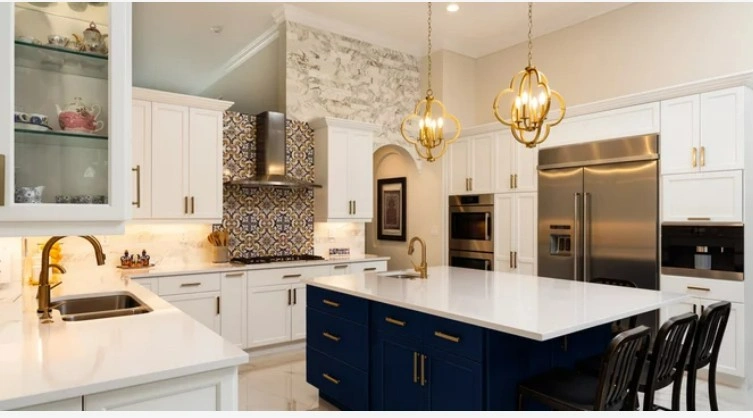
If you bought a home in Arizona before 2023, you likely have two things: a record amount of home equity and a mortgage interest rate that is significantly lower than today's market rates. This creates a unique dilemma for homeowners in 2026 who want to renovate: How do you access that wealth to improve your home without sacrificing your 3% or 4% mortgage?
The answer for many is the Home Equity Line of Credit (HELOC). In the stabilizing real estate market of 2026, the HELOC has emerged as the premier tool for funding kitchens, pools, and casitas. This guide will walk you through exactly how it works, the specific ROI you can expect in the Phoenix market, and why it beats a personal loan or cash-out refinance.
1. What is a HELOC? (The Basics)
Think of a HELOC as a credit card that uses your house as collateral. Unlike a standard loan where you receive a lump sum of cash, a HELOC gives you a revolving credit limit (e.g., $100,000).
- You Control the Cost: You only pay interest on the money you actually use. If you have a $100,000 line but only use $20,000 for a bathroom remodel, you only pay interest on the $20,000.
- The "Draw" Period (Years 1-10): During the first 10 years, you can borrow, pay it back, and borrow again. Most lenders require Interest-Only payments during this time, keeping your monthly obligation low while construction is ongoing.
- The "Repayment" Period (Years 11-30): After the draw period ends, the line freezes. You can no longer borrow, and the loan converts to a repayment schedule (Principal + Interest) to pay off the balance.
2. HELOC vs. Cash-Out Refinance: The 2026 Math
This is the most common question we get: "Should I refinance or get a HELOC?"
In 2026, the answer almost always depends on your current mortgage rate.
The "Blended Rate" Strategy
If you have a $400,000 mortgage at 3.5% and you need $100,000 for renovations, a Cash-Out Refinance would force you to refinance the entire $500,000 debt at current 2026 rates (likely 6.0% - 6.5%). This could raise your monthly payment by $1,000+ for the life of the loan.
With a HELOC, you keep your $400,000 at 3.5%. You only pay the higher market rate (approx. 7.5% - 8.5%) on the $100,000 you borrow. Even though the HELOC rate is higher, your Blended Rate (the weighted average of both loans) is much lower than refinancing everything.
3. Top Arizona Renovations & Their ROI in 2026
Not all renovations are created equal. In the Phoenix metro area, specific upgrades yield higher returns due to our climate and lifestyle.
The Kitchen Remodel
Estimated Cost (Mid-Range): $30,000 - $60,000
Potential ROI: 60% - 80%
The kitchen remains the heart of the home. In 2026, Arizona buyers are looking for "Desert Modern" aesthetics: light wood cabinets (white oak), matte black fixtures, and large quartz islands. Opening up a galley kitchen to the living room (removing walls) has the highest impact on value.
The Backyard Oasis (Pools)
Estimated Cost: $60,000 - $100,000+
Potential ROI: 40% - 50%
Warning: Pools are a lifestyle investment, not a purely financial one. While a pool is essential for many buyers in Gilbert or Scottsdale, you rarely get dollar-for-dollar value back when you sell. However, a HELOC is often the cheapest way to finance a pool compared to unsecured "pool loans," which can carry rates of 10-12%.
The Casita / ADU (Accessory Dwelling Unit)
Estimated Cost: $100,000 - $150,000
Potential ROI: 100%+
This is the breakout trend of 2026. With recent zoning changes in Phoenix and Tempe encouraging ADUs, building a detached guest house can add massive value. It adds square footage to your appraisal and offers potential rental income (long-term or Airbnb) that can often cover the monthly HELOC payment entirely.
4. Tax Benefits: The "Substantial Improvement" Rule
One major advantage of using a HELOC for renovations is the potential tax deduction. Under current IRS rules (valid through 2026), the interest you pay on a HELOC is tax-deductible if the funds are used to "buy, build, or substantially improve" the home securing the loan.
- Deductible: New roof, kitchen remodel, adding a pool, solar panels.
- Not Deductible: Using the HELOC to pay off credit cards, student loans, or buying a car.
(Note: Always consult a tax professional. Deductibility is subject to limits on total mortgage debt, typically $750,000 for couples filing jointly.)
5. How to Qualify for an Arizona HELOC in 2026
Qualifying for a second mortgage is slightly different than your primary one.
- Equity (CLTV): Lenders look at "Combined Loan-to-Value" (CLTV). Most will lend up to 80% or 90% of your home's value.
Example: Home Value ($600k) x 80% = $480k Max Lien. Minus Current Mortgage ($300k) = $180k Available HELOC. - Credit Score: Because second mortgages are riskier for banks, they prefer scores of 680+. Scores of 740+ get the best "Prime + 0%" interest rates.
- Debt-to-Income (DTI): Lenders are strict here. They want to ensure you can afford the payment even if interest rates rise. They typically cap DTI at 43% to 45%.
6. Managing the Risk: Variable Rates
The defining feature of a HELOC is the Variable Rate. It moves with the Federal Reserve's "Prime Rate."
- The Risk: If inflation spikes and the Fed raises rates, your payment goes up.
- The 2026 Outlook: Most economic forecasts for 2026 predict a stabilization or gradual decrease in rates, which benefits HELOC borrowers.
- The "Fixed-Rate Option": Many modern HELOCs allow you to take a portion of your balance (say, the $50k you spent on the kitchen) and "lock it" at a fixed rate for 5-20 years. This gives you the stability of a fixed loan with the flexibility of a line of credit.
Conclusion: Invest in Your Asset
Using a HELOC to renovate is essentially reinvesting in your own asset. Instead of paying interest on a credit card (which is throwing money away), you are paying interest to improve the value of your property.
If you love your neighborhood and your low mortgage rate, but your house needs a refresh, a HELOC is likely your best financial tool in 2026. Contact Roadrunner AZ Lending today for a free "Equity Analysis" to see how much you can access for your renovation project.
Frequently Asked Questions
Is a HELOC or a cash-out refinance better for home renovations in Arizona?
How much equity do I need to get a HELOC in Arizona?
Can I deduct HELOC interest on my taxes if I use it for a pool or casita?

Jonathan Moses
Senior Loan Officer | ✅ Verified NMLS #2064741
This guide was prepared by Jonathan Moses (NMLS #2064741), the senior loan officer and founder of Roadrunner AZ Lending. With years of experience in the Phoenix and Scottsdale markets, Jonathan is dedicated to providing expert, transparent advice. Learn more about Jonathan.